
It’s hard to imagine what it feels like at the beginning of a war. On the island of Java in the Dutch East Indies in January 1942, I imagine there was a tense mix of hope that the danger might pass them by and the growing fear that it wouldn’t.
My grandfather (Opa), Johannes H.T. Gerardu, likely didn’t have the luxury of such feelings. As a sergeant in the KNIL (Royal Netherlands East Indies Army), he had a front-row seat to the brewing storm. In December 1941, the Japanese invasion of Southeast Asia was well underway. The Dutch, sensing the threat to their resource-rich colony, declared war on Japan on December 8, 1941, the day after Pearl Harbor. However, the Japanese needed no such declaration to act. They had their eyes set on the Indies’ rubber and oil, and by January 11, 1942, they officially declared war on the Dutch.
Opa was stationed with the 5e Vliegtuggroep (5th air group) at Semplak, a hastily assembled airbase in Buitenzorg (now Bogor). The family lived off-base in a modest house. See my last post, A Mad Scramble to Prepare for the Japanese, to get a feel for where they lived. The map below is an aerial photo of the Palais du Gouverneur-General in Buitenzorg near their home. My dad was 13 years old and attending school at Notaris de Graaf-Stichting, a private secondary school. Life carried on as normally as possible—at least outwardly. But cracks in that normalcy began to show.
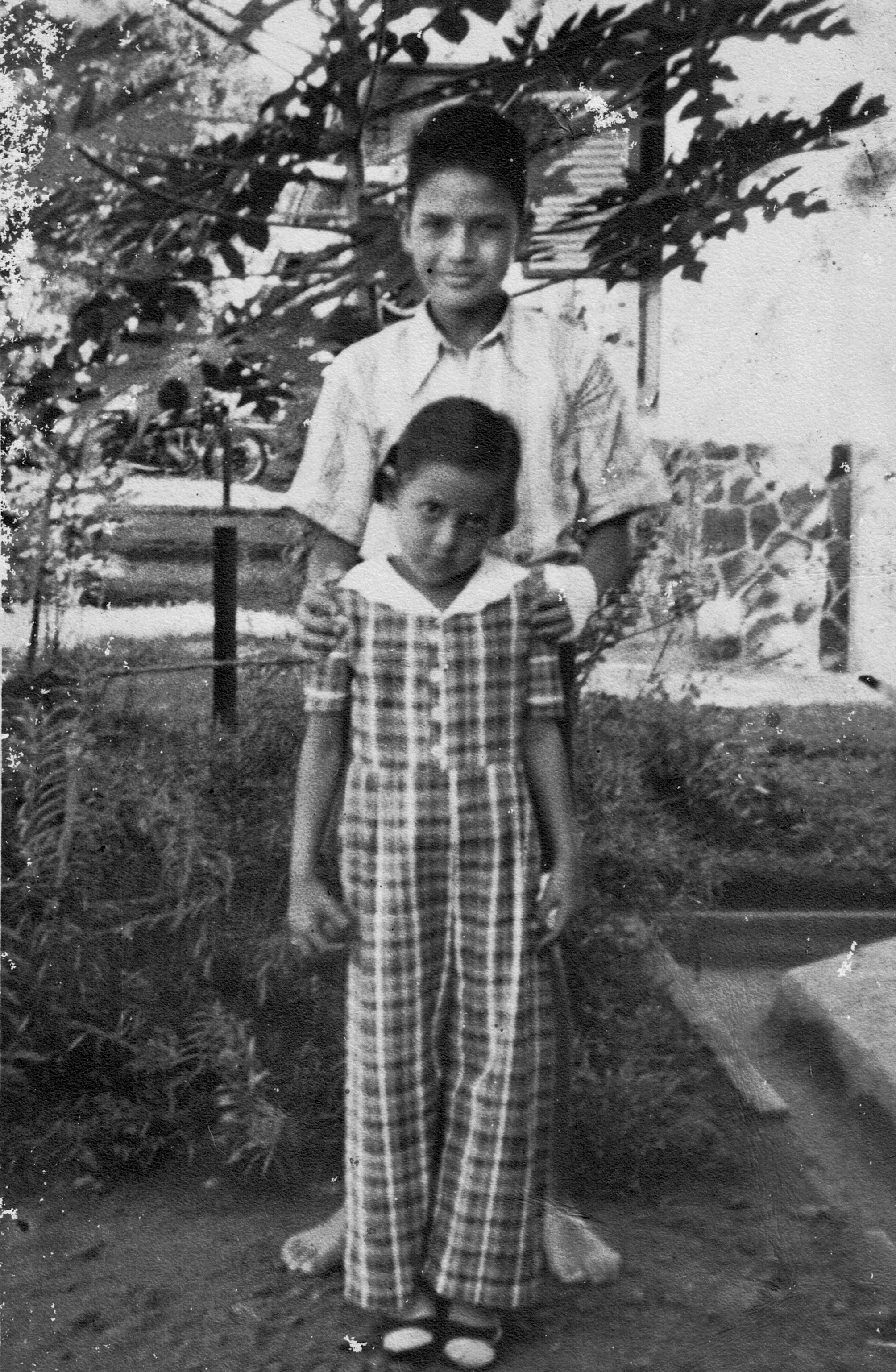

Their first real taste of war came when Opa and his squadron were sent to Singapore in December 1941, a harrowing journey that ended with his return on January 18, 1942. His oldest daughter was already married, and her husband also served in the KNIL, adding another layer of worry for the family. How much of the uncertainty did Oma, my father, and his younger sisters feel while Opa was gone? Did they sense the rising tension, even as they went to school and played in the garden?
When I reflect on their lives in those final weeks before the Japanese invasion, I’m struck by how much their situation mirrors the uncertainty we faced at the start of the COVID-19 pandemic in 2020. Despite the vast differences in scale and stakes, there is a shared human experience of not knowing what comes next. In 2020, the pandemic brought its own set of unknowns—empty shelves at the grocery store, shifting rules, and news updates that seemed to change by the hour. In late 1941 and early 1942, the unknown was a war creeping closer each day, with no way to predict how or when it might reach them.
The Dutch East Indies lived under the shadow of a changing world order for years. The once-dominant colonial powers of Europe were in decline, while Japan’s imperial ambitions grew stronger. The Netherlands was occupied by Germany, so it had little capacity to protect its colony on the other side of the globe. And the Japanese, desperate for resources like the Indies’ oil and rubber, were prepared to take them by force.
Despite the uncertainty, both times revealed the remarkable resilience of family and community. In 1942, families like mine leaned on one another to endure what came next. It’s hard to know exactly how they felt; still, I imagine they found strength in their families and friends, shared meals, whispered conversations, and little moments of normalcy. Similarly, at the beginning of the pandemic, we all leaned on family and friends, whether in person or through screens (yeah, this was a whole new world), to navigate an unpredictable world. In both situations, it’s a powerful reminder of how resilient we are and how much strength we can draw from the people around us.
Learning about our history helps us understand ourselves, and as they say, history repeats itself. Sure, the details of these two scenarios are different, but at the end of the day, we all need the same things—connection, courage, and hope. No matter what’s going on in the world, those are the things that keep us going. It’s a good reminder that even in the most challenging times, we’re not so different from those who’ve faced challenges before us.
The uncertainty they faced in early 1942 must have been overwhelming for my family. Their worst fears probably came true soon after, though I doubt they could have imagined how hard the next several years would be. The challenges they endured—many of which I’ll explore in future posts—are a humbling reminder of the incredible strength they had to find within themselves. We can use a little of that today in our divided world. What stories of resilience do you know from your own family? I’d love to hear how your loved ones have faced life’s uncertainties.
 Carla Gerardu-Low | Family Stories & Roots