Carla Gerardu-Low | Family Stories & Roots

Uncovering the Stories That Shaped Us

Everything I Don’t Know About Her: A Family Story From the Dutch East Indies — November 24, 2025

Everything I Don’t Know About Her: A Family Story From the Dutch East Indies

The Missing Beginning

We believe my grandmother, Dinah Benton, was born in the Dutch East Indies around 1900, possibly in Gombong, but we do not know for sure. There is no birth certificate. Her surname may not have been her own. She was orphaned by the age of eight. Her father was reportedly a native soldier in the KNIL, the Royal Netherlands East Indies Army. After both parents died, she was taken in by another KNIL family, raised in their household, and likely worked for them.

She eventually arrived in Meester Cornelis, a garrison town near Batavia (now Jakarta), where she met my grandfather. He was stationed there with the 16th Infantry Battalion. That is where her documented life begins.

What came before remains unknown.

Continue reading
How the Pastore–Walter Act Brought My Dutch-Indo Family to America — July 7, 2025

How the Pastore–Walter Act Brought My Dutch-Indo Family to America

I only discovered about 10 years ago that my parents came to the United States as refugees. Until then, I hadn’t thought much about how or why they came to America in 1959—I just knew they had left the Netherlands for a new life. It wasn’t until later that I discovered they immigrated under a law called the Pastore–Walter Act, a piece of Cold War-era legislation that opened a narrow door for families like mine.

That question—the story behind their journey—sat quietly in the back of my mind until a recent visit to the Wereldmuseum in Amsterdam. In the heart of Amsterdam-Oost, a diverse and lively district where the streets hum with languages from around the world, I wandered into an exhibit titled Our Colonial Inheritance.” It explores the Netherlands’ colonial past in places like the Dutch East Indies. In the same place, my family’s Indo story began.

The exhibit was as thought-provoking as it was uncomfortable. It forced me to reflect not just on what colonialism meant for the people who lived under it but also on what it meant for descendants like me—people shaped by that complicated legacy in ways we don’t always recognize.

Continue reading
Celebrating a Life: My Dad’s Memorial Video and Photos — February 7, 2025

Celebrating a Life: My Dad’s Memorial Video and Photos

Losing my dad has been so hard, but one of the ways I found comfort was by sharing memories—through stories, photos, and videos that captured his life. At the memorial dinner, I put together the following video to honor him, celebrating the moments that made him who he was to all of us.

In addition to this video, before the funeral mass, the chapel displayed a collection of photos—snapshots of a life well-lived, full of love, laughter, and family. Seeing those images again reminded me how much he meant to many people. His obituary includes the photo collection shown at the funeral for anyone who couldn’t attend.

I’d love for you to watch both of these and remember him with our family. Thank you all for your love and support—it truly means the world. 💙

Family Resilience: A Look at the Dutch East Indies in 1942 and the 2020 Pandemic — December 6, 2024

Family Resilience: A Look at the Dutch East Indies in 1942 and the 2020 Pandemic

It’s hard to imagine what it feels like at the beginning of a war. On the island of Java in the Dutch East Indies in January 1942, I imagine there was a tense mix of hope that the danger might pass them by and the growing fear that it wouldn’t.

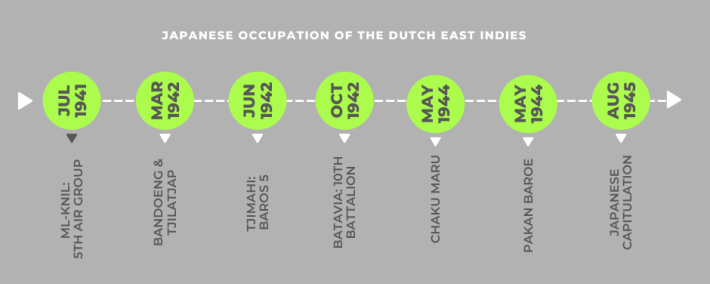
My grandfather (Opa), Johannes H.T. Gerardu, likely didn’t have the luxury of such feelings. As a sergeant in the KNIL (Royal Netherlands East Indies Army), he had a front-row seat to the brewing storm. In December 1941, the Japanese invasion of Southeast Asia was well underway. The Dutch, sensing the threat to their resource-rich colony, declared war on Japan on December 8, 1941, the day after Pearl Harbor. However, the Japanese needed no such declaration to act. They had their eyes set on the Indies’ rubber and oil, and by January 11, 1942, they officially declared war on the Dutch.

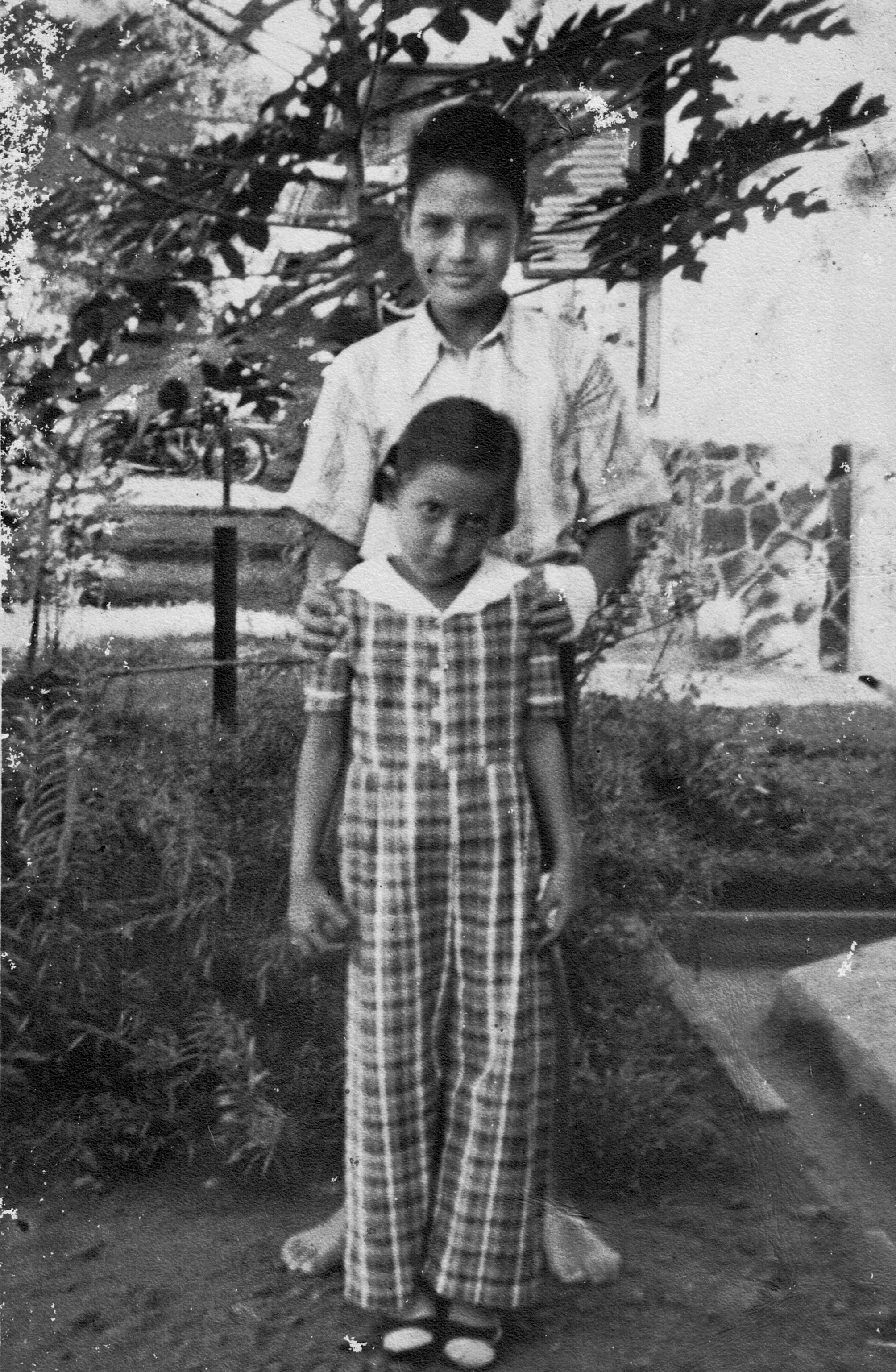
Opa was stationed with the 5e Vliegtuggroep (5th air group) at Semplak, a hastily assembled airbase in Buitenzorg (now Bogor). The family lived off-base in a modest house. See my last post, A Mad Scramble to Prepare for the Japanese, to get a feel for where they lived. The map below is an aerial photo of the Palais du Gouverneur-General in Buitenzorg near their home. My dad was 13 years old and attending school at Notaris de Graaf-Stichting, a private secondary school. Life carried on as normally as possible—at least outwardly. But cracks in that normalcy began to show.

Continue reading
Opa’s POW Journey Map — February 4, 2022

Opa’s POW Journey Map

I stumbled upon this awesome tool, StoryMap, to map journeys. It enabled me to take the research I have collected about my grandfather and present it in a sharable format.


The war in the Dutch East Indies was officially underway in early 1942. My grandfather, Johannes Hubertus Theodorus Gerardu (Opa) was a Sergeant in the Royal Netherlands East Indies Army Air Force (ML-KNIL). He was in charge of the kitchen at his base. My father, Servaas, (age 14), remembers Pappy (his father) stopping by the house to tell the family that his unit was moving inland toward Bandoeng (now Bandung). Below is the geographical story of his time as a POW during the Japanese occupation. He was a POW for three and a half very long years.

Continue reading
Recognizing Generational Trauma Can Change Your Life for Good — August 13, 2021

Recognizing Generational Trauma Can Change Your Life for Good

I started this blog as a way to memorialize the history of my family. The intent was to capture their stories for posterity’s sake. However, the process, not the stories I have written so far, is what has taught me so much more. In the many hours of conversations about my grandfather, I learned more about my father and his life in the Dutch East Indies than I could have ever imagined. Like so many people, I always assumed I knew my dad from a lifetime of interactions with him. My lifetime. Instead, I now believe that his early years during the World War II profoundly shaped who he is and why he does what he does. While his life in the United States is significantly different from his youth, his Dutch-Indo roots and the trauma experienced during the war shaped him. By extension, those experiences also shaped me.

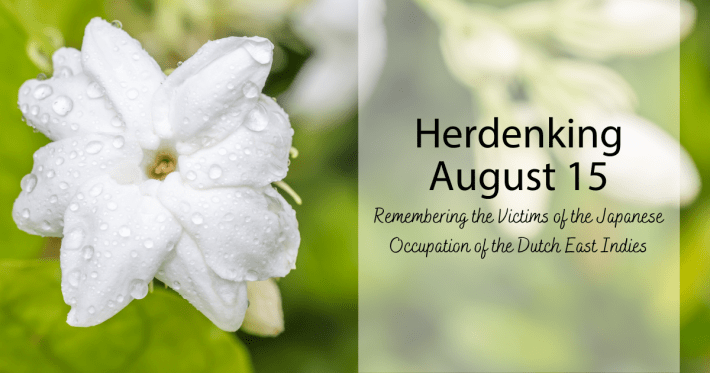
Growing up in Colorado, no one around me knew this history. The war ended there on August 15, 1945. A few years ago, I discovered that the Netherlands commemorates victims of the Japanese occupation of the Dutch East Indies (now Indonesia) every year on August 15th. The commemoration is called Herdenking. On this date in 1945, my grandfather, two uncles, and one of my uncle’s brothers were liberated from Japanese POW camps. Unfortunately, one of my uncle’s brothers died during a POW transfer on the Junyo Maru.

Continue reading